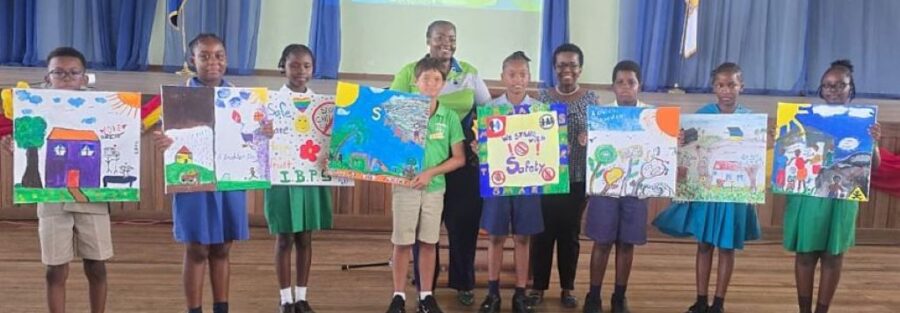
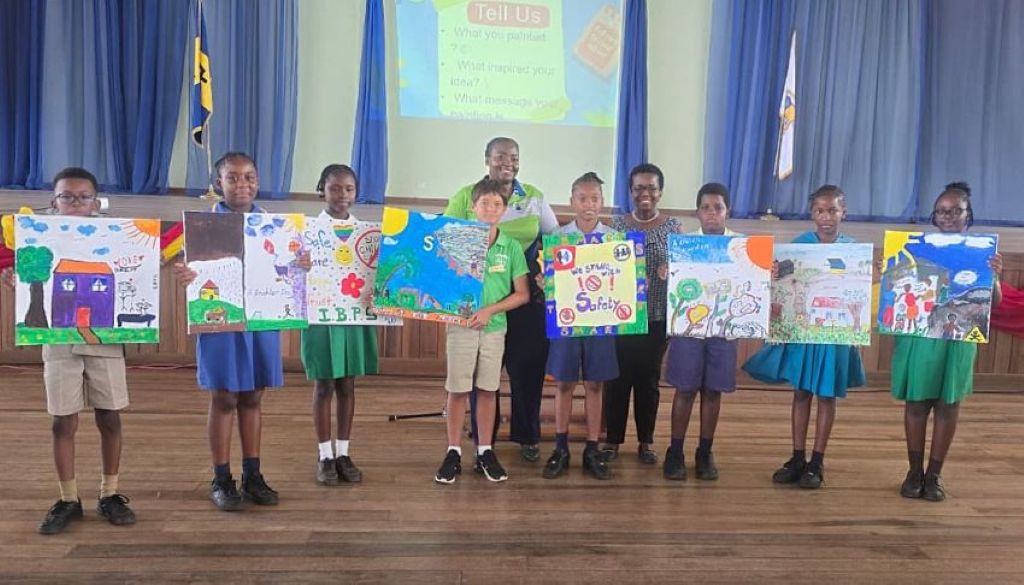
Students from primary schools in the north were encouraged to use their voices to protect vulnerable children and become champions for children’s rights during the National Child Labour Forum, held at the Daryll Jordan Secondary School, Trents, St. Lucy, today.
Hosted by the National Child Labour Committee, in collaboration with the Ministry of Labour, Social Security and the Third Sector, the forum formed part of activities leading up to World Day Against Child Labour, which is observed annually on June 12. The event was held under the theme, “Protect Our Children: Raise Your Voice Against Child Labour”.
During her welcome remarks, Workplace Wellness Coordinator and National Child Labour Committee member, Rhonda Farley, reminded students that every child deserves the opportunity to learn, grow, and enjoy a safe and healthy childhood.
“Childhood is meant to be a time for learning, growing, playing, and dreaming about the future. It is a time when children should be in school, discovering new ideas, developing talents, and building skills that will help them succeed,” she said.
Mrs. Farley also noted that while many children enjoy these kinds of opportunities, there are still millions of children around the world who continue to be affected by child labour. She explained that many of these children are forced to work for long hours or care for siblings instead of attending school, or they end up engaging in hazardous activities that threaten their health and well-being.
The National Child Labour Committee member also pointed out that with the emergence of digital forms of child labour, there were now some children who are involved in online activities such as content creation, gaming for money, selling products online, or even completing digital tasks.
“While technology can be exciting and creative, it can also expose children to exploitation, long working hours, and online abuse,” Mrs. Farley warned.
She stressed that child labour can take many forms and is not always easily identified. “Child labour is exploitation. It is deprivation. It is theft of childhood. Whatever form it takes, our responsibility as adults is clear: we must recognise the harm and protect our children,” she stated.
Mrs. Farley also mentioned Barbados’ strong commitment to education, noting that Government had invested significantly in ensuring that children had access to free education and support services which were designed to help them thrive. However, she cautioned that continued vigilance is necessary in order to ensure that every child remains protected.
Making reference to the International Labour Organization’s 2026 campaign slogan, “Red Card to Child Labour,” she challenged students to become active advocates for change. “You are here to learn what child labour is, why it happens, and how it affects children, families, and communities. More importantly, you are here to discover how you can become advocates for children’s rights,” she said.
Mrs. Farley offered this definition of an advocate. “Advocates are people who speak up for others, raise awareness about important issues, and encourage positive change.
“You can use your voices, talents and creativity to educate others and help protect your peers. As young people you have the power to educate others, challenge harmful practices and promote the rights of every child to learn, play and grow in a safe environment,” she said.